This guide walks through how to configure a Teams meeting with KUDO Audio Manager for Dante audio output. After completing this process, the Teams meeting audio will be captured, translated by KUDO AI, and routed into a Dante-enabled audio infrastructure.
Audience: Audio Managers, AV Technicians, Operators, and meeting organizers.
Before You Start
Before configuring Audio Manager and Dante output, confirm that the Teams meeting has already been created, Dante Virtual Soundcard is installed on the Audio Manager computer, Dante Controller is installed and configured on the Dante network, the Audio Manager user has been added to the KUDO meeting, and the Audio Manager computer is connected to the same Dante network as the destination devices.
For the best audio stability, use a wired Ethernet connection, avoid Wi-Fi for Dante workflows, close any unnecessary audio applications, and confirm the Dante clock is stable before the meeting begins.
Important: Venue Audio OUT is available for both AI and Human interpretation sessions. Venue Audio IN is only supported for Human interpretation workflows.
Configuring Audio Manager
- Add the KUDO app to the Teams meeting and configure the AI session.
- Enable the Audio Manager role during meeting setup. This allows translated language channels to be routed externally through Dante-compatible workflows.
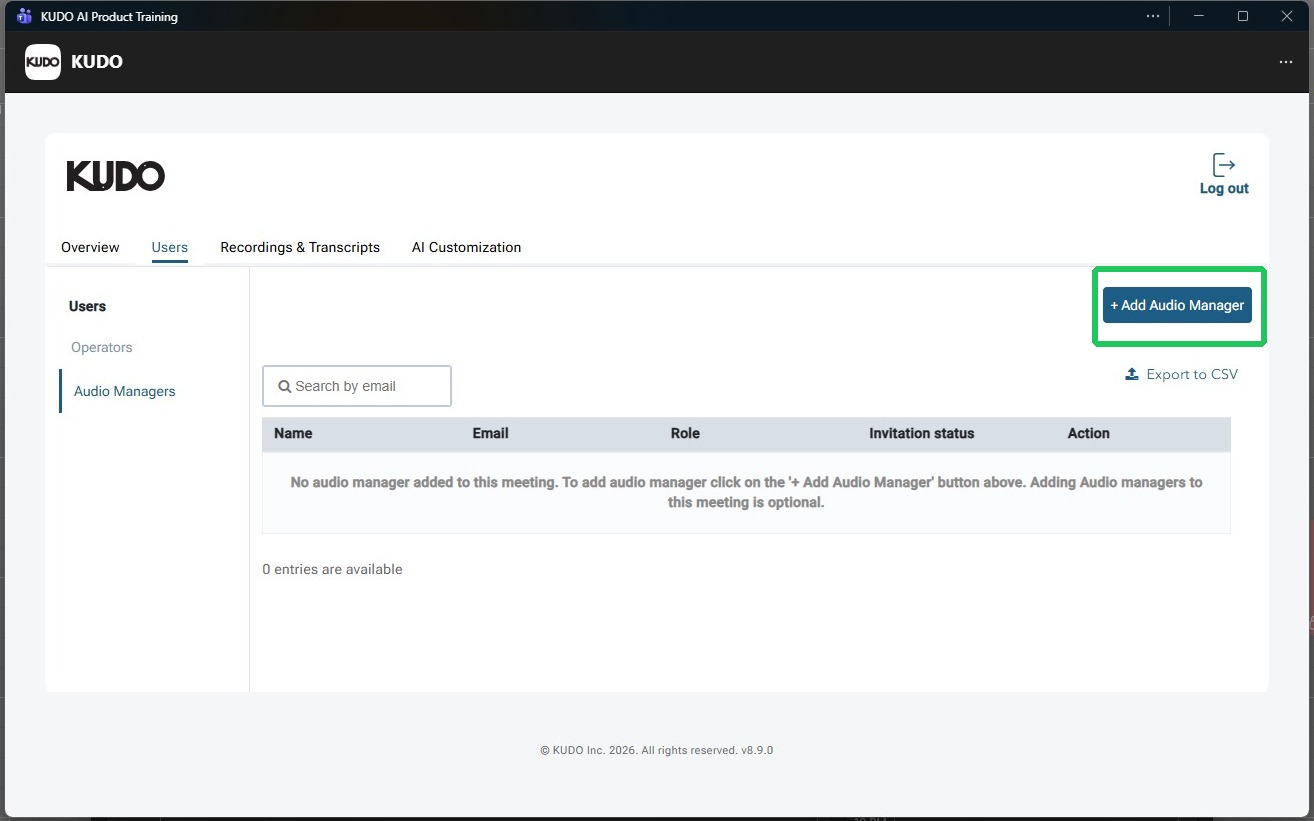
- Go to Users > Audio Managers, click + Add Audio Manager, and enter the Audio Manager's email address. If this is their first session, they'll need to complete the account setup from the invitation email before joining the meeting.
- On the Audio Manager computer, install and open Dante Virtual Soundcard.
- With Dante Virtual Soundcard running, log in to KUDO using the assigned Audio Manager credentials.
- Select the Audio Manager role to access Dante routing and venue audio configuration tools.
- Locate the meeting, go to Settings, and select Venue Audio OUT.
- Venue Audio IN sends onsite interpreter booth audio into KUDO. Available for Human interpretation sessions only.
- Venue Audio OUT sends translated KUDO audio to external devices, Dante-enabled systems, or broadcast infrastructure. Available for both AI and Human interpretation sessions.
- Click Edit Audio Settings.
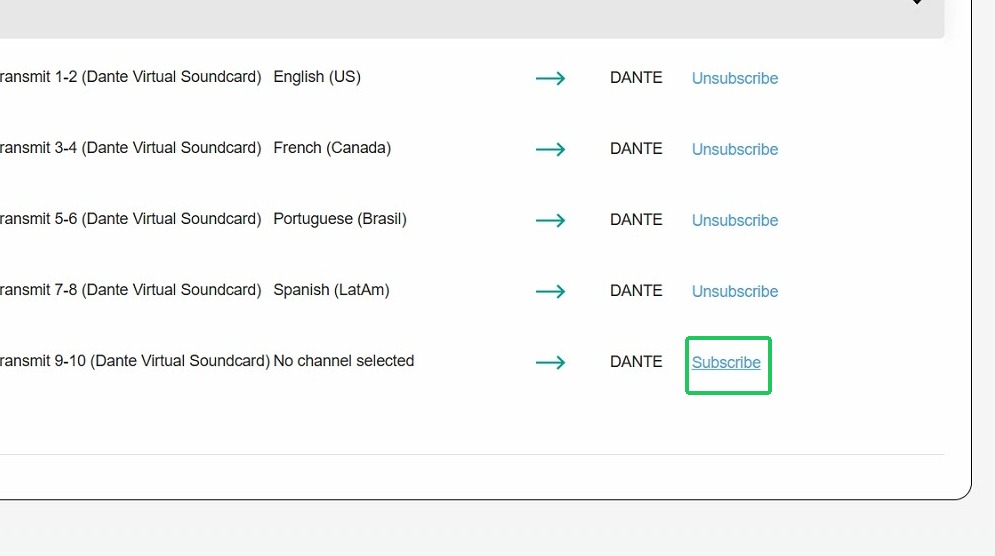
- Find the Dante Virtual Soundcard device and assign each translated language channel to the desired Dante output channel.
- Subscribe each translated language output to complete the routing.
Troubleshooting
| Task | Action | Expected Result |
|---|---|---|
| Verify Dante Clock Synchronization | If the KUDO Audio Manager is not available in Dante Controller, confirm that all Dante devices are synchronized to the same Dante clock source before the meeting begins. | Dante devices appear correctly inside Dante Controller and Audio Manager becomes available for routing. |
| Verify Dante Network Connectivity | Confirm that Dante Virtual Soundcard is running, the Audio Manager computer is connected to the Dante network, destination Dante devices are visible inside Dante Controller, and firewall or network policies are not blocking Dante traffic. | Dante devices communicate correctly across the network and translated audio channels become available for routing. |
| Restart Audio Manager Routing | If translated channels stop updating or audio routing becomes unstable, restart Dante Virtual Soundcard, reopen Audio Manager, and verify Dante subscriptions inside Dante Controller. | Audio routing reconnects and translated audio channels resume normally. Translated audio may temporarily pause during reconnection. |